Showing posts with label china. Show all posts

Sunday, March 6, 2016

China's Wealth Management Products, a Q&A

We've had a number of questions regarding the growth and the risks surrounding China's Wealth Management Products (WMPs). Here is an overview in a Q&A format.

Q: What are the reasons for the continuing demand and proliferation of WMPs in China?

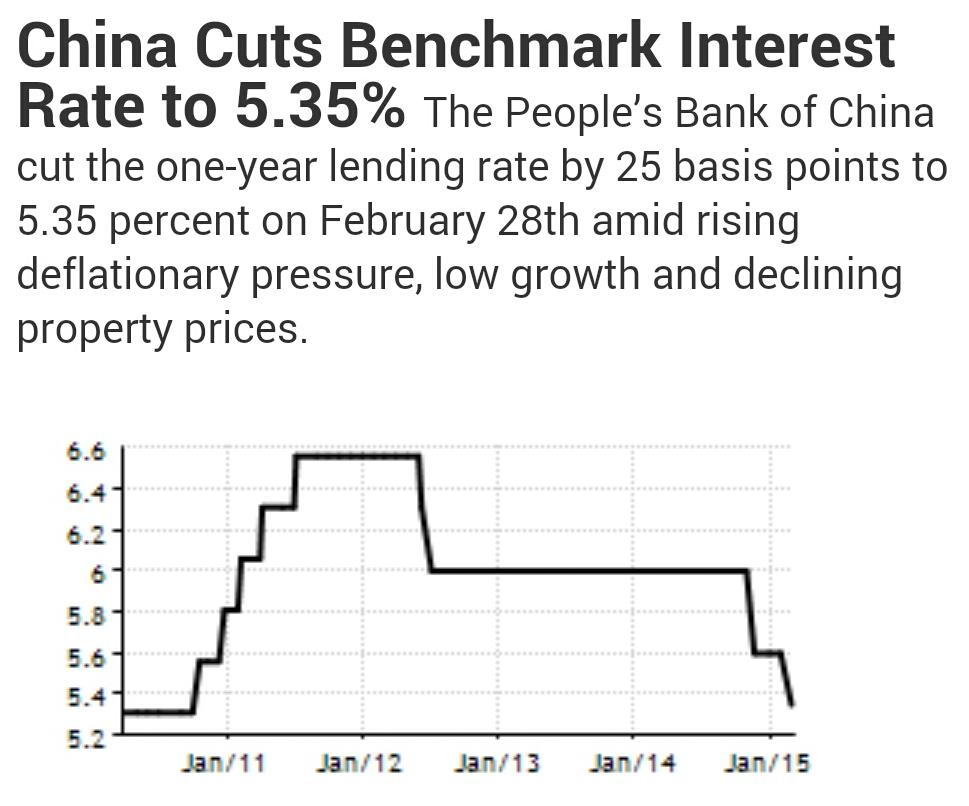
1. China's bank deposit rates have been extremely low over the past decade and until recently have been artificially capped by the nation's central bank, the PBoC. The reason for these low rates is Beijing's effort to make sure that the banking system has access to cheap financing in order to stimulate credit growth.

Source: Tradingeconomics, PBoC

These days, awash with deposits, many banks pay even less than the latest rate set by the PBoC. Here is one example showing why China's depositors have been desperate for yield.

Source: Bank of China (one of the 5 biggest state-owned commercial banks in China)

2. Another reason for the explosion in WMPs in China is the rapid growth in money supply, with limited options to deploy all the new cash. The chart below shows China's  broad money supply (M2), now 15 times the size it was at the end of 1999. That's a great deal of liquidity sloshing around.


3. More money poured into WMOs last year after the massive "correction" in China's stock market, as investors looked for other sources of yield.


Q. What rates do banks offer to their WMP customers?
A. In 2015 the typical WMP product yield ranged between 4.5% and 5%.

Q. What is the typical WMP term?
A. According to HSBC, "more than 90% of China’s fixed duration WMPs are shorter than a year".

Source: HSBC

Q. How do WMPs generate returns?
A. These days most are invested in corporate bonds although some also invest in private loans. The most popular type of bond in WMPs' asset portfolios is a AA corporate (domestic agency ratings of course) with a 4-5 year maturity.

Q. What is the yield on such bonds currently and is it sufficient to pay the WMP rates?
A. Here is the RMB AA corporate yield curve. With a little help from leverage (usually via the repo market) and/or a big duration mismatch, WMPs generate the necessary yield.

Source: HSBC

Q. Has the WMP growth impacted corporate bond yields in China?
A. Yes. Since early 2014, China's corporate bond yields have been steadily declining. A great deal of this is the result of China's WMP demand.

Source: S&P

Q. Who manages WMPs?
A. While banks actively market these products, these days the management is outsourced to brokers (and other non-bank entities) with asset management/trading desks. Banks used to manage WMPs but due to regulatory and resource constraints have shifted the process to third parties.

Q. What sort of arrangements do banks have with WMP managers?
A. WMP managers operate like hedge funds, retaining 20-30% of the upside above the "guaranteed" contractual return of 4.5% - 5% (this is on top of the management fees).

Q. What type of risks are inherent in this market?
A. Given the hedge-fund style upside, this can be an extremely profitable business, encouraging higher leverage as rates decline. Since this activity is concentrated outside of the banking system, it is not yet regulated, resulting in rapid growth in China's "shadow banking". In fact this is one of the key reasons the PBoC has been so reluctant to lower the target interest rate, focusing on the reserve ratio (RRR) instead. Lower rates will encourage further "reach for yield" and increase leverage in the system.

An even greater systemic risk in the WMP market is the asset-liability mismatch - one of the key problems that precipitated the financial crisis in the United States (funding illiquid mortgage bonds with asset-backed commercial paper or repo). The chart below shows the amount of WMP placed vs. what is actually reported at year-end by banks. Many WMPs are timed to mature before the bank reporting date ("window dressing"). Most WMPs of course mature several times a year and the industry relies on the WMP customers to roll (on a net basis) their maturing WMPs. Moreover the market's tremendous growth has banks and managers believing that rolling would not be an issue. If some investors pull their money out, there will always be plenty of new ones wanting to come in. Sounds familiar?

Source: HSBC

Q. Why isn't Beijing addressing this rising systemic risk?
A. The PBoC has to tread carefully in order to avoid disrupting its growing domestic bond markets. The situation is quite fragile and any hint of a serious regulation could send the corporate and other bond markets tumbling (starting a deleveraging cycle). As the regulators try to figure out how to contain these risks (including endless discussions with the major banks), the WMP market continues to grow.


_________________________________________________________________________

Sign up for our daily newsletter called the Daily Shot. It's a quick graphical summary of topics covered here and on Twitter (see overview). Emails are NEVER sold or otherwise shared with anyone.
_________________________________________________________________________

From our sponsor, Fitch Solutions: Sign-up for Inside Credit - a weekly wrap-up of noteworthy Fitch content delivered every Friday.

SoberLook.com

Tuesday, January 19, 2016

Big Bad China

Guest post by $hane Obata


It seems like every day we are inundated with news out of China. Investors are already concerned. The offshore renminbi (CNH) is more international than the onshore one (CNY), which is tightly managed by the government. As such, the rising spread (CNH-CNY) between the two may be indicative of mounting skepticism about China’s economy and its markets. Likewise, capital is fleeing the country as hot money flows have accelerated:

Source: @vikramreuters

In the following sections we will attempt to analyze China’s markets and determine the biggest risks facing its economy. Lastly, we will try to answer the following question: does it matter to us?

Financial Markets

As the first week of trading in 2016 came to an end, the Chinese markets had already been halted twice. Newly minted circuit breakers, which have since been suspended, were triggered when China’s main equity index, the CSI 300, fell 7% on two separate occasions. The first selloff was triggered by a rumor that the China Securities Regulatory Commission (CSRC) was planning to suspend a short sale ban that has kept a reported ~$185 billion off the market. Subsequently, the CSRC decided to extend the ban in order to calm the markets. The second drop followed a significant devaluation of yuan by the People’s Bank of China (PBOC). China has also backtracked on that move. Basically, the Chinese markets are confusing…

That said, the volatility is not surprising considering how unsophisticated China’s market is. One university study found that 2/3 of the new investors at the end of 2014 did not have a high school diploma:

Source: Bloomberg Brief

Along the same lines, individuals account for at least 80% of trading on the mainland exchanges. In other words, there are many speculators and few investors. China’s markets are undeveloped and relatively unimportant. Nonetheless, they may offer some clues into consumer sentiment and the government’s ability (or inability) to control the economy.

Economy

China remains an indispensable part of the global economy. In nominal terms, China is the world’s second biggest economy with a GDP of ~$10.3 trillion. However, in terms of Purchasing Power Parity-adjusted GDP (PPP), it has surpassed the US. Moreover, it accounts for ~40% of global PPP-adjusted GDP growth:

Source: The Economist

In regards to trade, China is the world’s biggest player. In 2013, it led the world in exports ($2,209 billion) and was the number two country for imports ($1,950). The combined value of its trading amounted to $4,159 billion, marginally higher than the US’ $3,909 billion.

Debt

China’s aggregate debt level is one of the highest in the world, although it may not seem to be at first glance. China’s government debt-to-GDP ratio is 55%. To put that in perspective, the US and Japan are at 89% & 234%, respectively. Even so, it is always prudent to consider a country’s debt composition. China’s mounting debt comes into focus when we account for non-financial corporate debt (125% of GDP), financial institution debt (65%) and household debt (38%). The grand total is an astounding 282% of GDP, or $28.2 trillion:

Source: McKinsey

The rate of debt growth is also a concern. Non-financial corporate debt, increased from 72% to 125% of GDP from 2007 to 2Q14, a 73.6% increase.

China’s debt load is a global risk because of how tightly managed its economy is. The government has allowed unprofitable companies to stay in business. Though defaults have been very limited, China must allow these companies to fail eventually. Otherwise, it will continue to suffer from high debt servicing costs (~30% of GDP).

Overcapacity

Government investment has been a big part of China’s economy. Massive amounts of stimulus went into factories, leading to overcapacity in sectors such as coal and steel. This is making it very difficult for companies that operate within those sectors to make profits – both domestically and abroad. Fiscal stimulus also went into housing and infrastructure, which are both clearly overbuilt. Despite the overcapacity, gross capital formation still represents ~45% of GDP:

Source: Gordon T. Long

That is more than twice as high as it is in both the US and the European Union.

Monetary Policy & FX

The PBOC has been very active trying to support the economy. It has cut rates 6 times since November of 2014. Likewise, it has been lowering its Reserve Requirement Ratio and selling its foreign reserves in an attempt to prevent excessive devaluation of the yuan (CNY). They are down more than $400 billion (from a peak of ~$4 trillion) since mid-2014:

Source: @TomOrlik

FX is also a risk because China has a great deal of USD-denominated debt. In mid-2015, non-bank borrowers held ~$1.2 trillion worth of it. This debt becomes more expensive as USDCNY rises, which is exactly what the markets expect to happen.

Corruption Crackdown

China’s anti-corruption campaign is a step in the right direction. That said, it is a big political risk for foreign investors. High profile businessmen and officials have been disappearing while others are being investigated. Moreover, securities regulators have been cracking down on market manipulators, “ensnaring some of the nation’s most high-profile money managers and announcing more than 2 billion yuan of fines and confiscated gains” (source: BBG Brief). Critics of the campaign suggest that it may deter business while failing to address the corruption that exists within the ruling party.

Implications

As investors, we should be concerned because China is one of the biggest economies and the world’s leading trader. Therefore, if it slows down then so will global growth:

Source: Goldman Sachs

China is also important because it is a massive source of demand for many commodities. Thus, its weakness is spreading to undiversified economies such as Russia, Brazil, and South Africa. Recessions in those countries might not spill over to the rest of the world. Nevertheless, it is important to consider the amount of debt they have accumulated since the financial crisis. In the US, credit is already tightening. If borrowing costs rise for the emerging markets, especially China, then we may see a wave of defaults with untold consequences.

_________________________________________________________________________
- $hane Obata & Richardson GMP AM

The opinions expressed in this report are the opinions of the author and readers should not assume they reflect the opinions or recommendations of Richardson GMP Limited or its affiliates. Assumptions, opinions and estimates constitute the author's judgment as of the date of this material and are subject to change without notice. We do not warrant the completeness or accuracy of this material, and it should not be relied upon as such. Before acting on any recommendation, you should consider whether it is suitable for your particular circumstances and, if necessary, seek professional advice. Past performance is not indicative of future results. The comments contained herein are general in nature and are not intended to be, nor should be construed to be, legal or tax advice to any particular individual. Accordingly, individuals should consult their own legal or tax advisors for advice with respect to the tax consequences to them, having regard to their own particular circumstances.. Richardson GMP Limited is a member of Canadian Investor Protection Fund. Richardson is a trade-mark of James Richardson & Sons.

_________________________________________________________________________

Sign up for our daily newsletter called the Daily Shot. It's a quick graphical summary of topics covered here and on Twitter (see overview). Emails are NEVER sold or otherwise shared with anyone.
_________________________________________________________________________

From our sponsor, Fitch Solutions: Sign-up for Inside Credit - a weekly wrap-up of noteworthy Fitch content delivered every Friday.

SoberLook.com

Wednesday, August 5, 2015

Beijing may question the yuan peg as the Fed prepares for liftoff

Today's ISM non-manufacturing report showed US services sector expansion considerably stronger than economists had anticipated. The strength of services sector expansion however has diverged materially from what we see in US manufacturing.

Source: St. Louis Fed, ISM

The reason for the divergence is the strength of the US dollar, which on a trade-weighted basis is at the highest level in over a decade.

Source: St. Louis Fed

Strengthening US currency has generated a significant drag on growth in the manufacturing sector. We've all read the headlines.


But haven't we seen this divergence between the services and the manufacturing sectors elsewhere? Indeed just yesterday Markit published a similar chart for China.

Source: Markit

This of course is more than a coincidence. China's currency tie to the US dollar resulted in a similar dynamic of manufacturing sector significantly underperforming. Unlike the US however, China's manufacturing is more sensitive to exports, making the slowdown far more pronounced - resulting in an outright contraction (PMI below 50 in the chart above).

In recent months the yuan has been firmly pegged to the dollar. There are a number of reasons for this linkage, including China's wish to make the yuan part of the so-called Special Drawing Rights (SDRs), a basket of currencies constructed by the IMF and held by various central banks. Beijing reasoned that the yuan's stability would help them with that cause.

Source: barchart

However, yesterday we got this headline.

Source: Reuters

Time to give up the peg? There are of course other reasons China may want to maintain the link to the dollar - one of them is to continue "rebalancing" the economy.

Source: MRB

This policy however could prove to be too costly, as competitors whose currencies have been devalued may take market share from China. Here is how the yuan has appreciated against the Mexican peso for example (chart below). With margins tightening in a number of industries, when a manufacturer decides where to build a factory, Mexico (and a number of other countries) may now be a cheaper solution.


It's unclear if China will ultimately let the peg go or if the yuan will continue tagging along with the US dollar. Will China want to wait until the 2016 IMF decision on the SDR inclusion? With the Fed getting ready for "liftoff" in September while most central banks are easing, the dollar could continue marching higher. This could slow China's economic growth materially below the current ("reported") 7% per year. In effect the tightening of monetary conditions in the US will be transmitted to China via the peg. If the dollar indeed moves higher as US rates rise, will Beijing finally run out of patience?


_________________________________________________________________________

Sign up for our daily newsletter called the Daily Shot. It's a quick graphical summary of topics covered here and on Twitter (see overview). Emails are NEVER sold or otherwise shared with anyone.
_________________________________________________________________________

From our sponsor, Fitch Solutions: Sign-up for Inside Credit - a weekly wrap-up of noteworthy Fitch content delivered every Friday.

SoberLook.com

Sunday, June 7, 2015

Unprecedented levels of activity in China's equity markets

The speculative fervor in China's equity markets is spreading as the Shanghai Composite hits new multi-year highs on elevated volume. The index easily cleared the 5000 mark after hovering just just above 2000 around six months ago. This rally has been nothing short of spectacular.

Source: Investing.com

Here are some key trends that point to just how heated the market has become.

1. A-share (domestic) trading activity has exploded.

Source: Credit Suisse

2. Weekly account openings have reached new highs. This is a revenue bonanza for China's brokers as many tap the IPO market for themselves (see story).

Source: ‏@vikramreuters

3. P/E ratios are touching historical records as well as valuations are stretched in many instances.

Source: ‏@NickatFP 

4. Margin debt levels are also near record, including as a percentage of market capitalization. Here is margin debt a percentage of the GDP.

Source: @PatrickMcGee_ 

Perhaps the most telling sign of speculative activity is this photo. There isn't much one could say here.

Source: @enlundm @DoubleEagle49

China's public equities market cap is now around $10 trillion (as a comparison, Japan's whole market is half that). That's over 13% of the global equity market capitalization (after being just above 5% some six months ago). Chinese tech firms listed in the US are now running back to China where their shares can get an instant pop in valuations (see story).

While many analysts are calling this a bubble, it's important to point out that bubbles can last for a long time. Unless Beijing interferes - and there is a strong possibility it will - this trend could last for a while. Of course the longer this goes on, the uglier things will get on the way down.

_________________________________________________________________________

Sign up for our daily newsletter called the Daily Shot. It's a quick graphical summary of topics covered here and on Twitter (see overview). Emails are NEVER sold or otherwise shared with anyone.
_________________________________________________________________________

From our sponsor, Fitch Solutions: Sign-up for Inside Credit - a weekly wrap-up of noteworthy Fitch content delivered every Friday.

SoberLook.com

Sunday, May 10, 2015

China's falling interest rates

Expectations are building up that China's central bank will continue announcing further easing actions.


But it's not what the PBoC is saying that matters to the economy as much as what's actually going on in the short-term rates markets. And short-term rates continue to fall. This is a form of easing without the central bank announcements.

Overnight interbank rate (Source: SHIBOR)

Here is the 7-day repo rate - a fairly liquid short-term secured lending market in China.

Source: Chinamoney

Note that even the 1-year SHIBOR, to the extent it represents an actual lending rate, is falling (though remains elevated relative to inflation).

1-year interbank rate (Source: SHIBOR)

China's rates continue to decline and the PBoC will support this trend - with or without policy announcements.

On a related note, one of the reasons China needs to lower interest rates is to help the nation's strapped municipalities refinance their debt. Currently a great deal of the debt is structured using off balance sheet bank products and Beijing's goal is to shift to the muni market. That process however will take some time.

SourceL @Callum_Thomas, @prchovanec 


_________________________________________________________________________

Sign up for our daily newsletter called the Daily Shot. It's a quick graphical summary of topics covered here and on Twitter (see overview). Emails are NEVER sold or otherwise shared with anyone.
_________________________________________________________________________

From our sponsor, Fitch Solutions: Sign-up for Inside Credit - a weekly wrap-up of noteworthy Fitch content delivered every Friday.

SoberLook.com

Saturday, March 28, 2015

Frenzied speculative activity in China's equity markets

It's time to take another look at the recent developments in China's equity markets as major indices hover near the highs we haven't seen since 2008.

Source: Investing.com

With property markets in trouble, China's speculative investors are turning to equities. Moreover, increasing numbers of new investors are entering the markets. Last week we saw more than a million new A-share accounts opened, with brokerage firms having trouble keeping up.

Source: @vikramreuter

What's particularly alarming is that many new investors jumping into the market tend to be poor and far less educated. Everyone is all of a sudden an "expert" investor. Anecdotal evidence suggests that "hot" stock tips can be "obtained" from places like your local grocer and the barbershop.

Source: @Callum_Thomas, @TomOrlik 

The most compelling evidence of speculative frenzy in these markets comes from the volume of stocks bought on margin.

Source: @Callum_Thomas, @prchovanec

These developments certainly suggest that a bubble is building in these stock markets - similar to what we saw prior to the financial crisis in China. From the peak in 2007 it took the market about a year to give up 71%. Of course many argue that valuations are far better now and do not warrant such a correction. Perhaps.

According to Patrick Chovanec, when it comes to valuations, there are some issues to consider. Valuations of course depend on the outlook for earnings (which could be tricky given the slowing economy) as well as the credibility of Chinese reported earnings. Chinese banks have low valuations simply because the quality of loan portfolios is expected to deteriorate. Some earnings reports are skewed by vendor financing which is not always properly disclosed. Yet other firms don't disclose their full liabilities, which are often off balance sheet in special-purpose vehicles.

Many of these bets are based on new stimulus expectations from Beijing rather than valuations. The timing, scope, and effectiveness of such stimulus however remains uncertain.

Whatever the case, given the sheer size of the potential new investor pool, this trend can go on for some time. However, Beijing is unlikely to passively watch these developments unfold. An additional regulatory action (and we already had one recently) could cause this market to take a material hit. China could put further limits on margin trading and add other restriction on trading activities. Moreover, such action could take place much sooner than many investors expect. We don't need extreme valuations to see a major correction.

_________________________________________________________________________

Sign up for our daily newsletter called the Daily Shot. It's a quick graphical summary of topics covered here and on Twitter (see overview). Emails are NEVER sold or otherwise shared with anyone.
_________________________________________________________________________

From our sponsor, Fitch Solutions: Sign-up for Inside Credit - a weekly wrap-up of noteworthy Fitch content delivered every Friday.

SoberLook.com

Sunday, March 15, 2015

Is China's growth slower than the 7% consensus?

Further evidence is emerging that China's economic growth is likely to slow further. Even without thinking about growth fundamentals, when you have a 10 trillion dollar economy, a 7% growth is larger than the whole GDP of Sweden or Poland. The sheer size of China's economy relative to the rest of the world will limit its growth rate. China's authorities openly admit the growth challenges the nation faces.
FT: - [Premier Li Keqiang] gave his assurance in Beijing’s Great Hall of the People while warning that China would struggle to meet its annual growth target of “around 7 per cent” this year. “It is true we have adjusted down somewhat our GDP target, but it will by no means be easy for us to reach this target.” Mr. Li told reporters at the end of the annual parliamentary session. “China’s economy has already exceeded $10tn so a 7 per cent increase is equivalent to the entire economy of a medium-sized country.”
The question however remains: could we see growth that is substantially below even this reduced estimate? The latest fundamental economic reports seem to suggest a sharper slowdown than economists have been forecasting. Here are three examples: fixed asset investment growth, industrial production, and retail sales - all below consensus (see "Act" vs "Forecast").


Source: National Bureau of Statistics, Investing.com

Furthermore there is a slew of other indicators as well that seem to support the view that China's slowdown is sharper than originally thought.

1. China's rail freight volume:

Source: @SBarlow_ROB

2. Hong Kong jewelry sales and Macau gaming revenue:

Source: @M_McDonough

3. Hong Kong industrial production growth:


4. Price declines in China's industrial commodities markets. Here is the Shanghai Futures Exchange hot-rolled coil May futures contract:

Source: barchart

When some of these as well as other metrics are combined into the Bloomberg China GDP Tracker, we are looking at a growth rate that is below 6.5%. While still tremendous relative to much of the world, this viewed as a significant slowdown for China.

Source: @M_McDonough

Monetary conditions such as the strong yuan (which has risen sharply with the US dollar) as well as unusually high real rates (discussed here) will further dampen economic growth. For example for certain types of manufacturing, a US firm may now choose Mexico over China as the yuan has become much more expensive relative to the peso (in addition to lower shipping costs due to proximity).

CNY/MXN

Slowing growth would suggest that China's equity markets should be under pressure. Just the opposite is taking place however - the Shanghai Composite is near multi-year highs.

Source: barchart

The reason has to do with stimulus expectations. Economic weakness (relative to historical growth) has been so pronounced, Beijing is ready to provide monetary and fiscal support.
FT: - “Under this ‘new normal’ state we need to ensure that China’s economy operates within a proper range,” Mr Li told Sunday’s press conference. “If our growth speed comes close to the lower limit of its proper range and affects the employment and increase of people’s incomes, we are prepared to step up targeted macroeconomic regulation to boost market confidence.”
How effective such stimulus will be remains to be seen but Beijing will certainly make an all-out attempt to avoid a "hard landing".

_________________________________________________________________________

Sign up for our daily newsletter called the Daily Shot. It's a quick graphical summary of topics covered here and on Twitter (see overview). Emails are NEVER sold or otherwise shared with anyone.
_________________________________________________________________________

From our sponsor, Fitch Solutions: Sign-up for Inside Credit - a weekly wrap-up of noteworthy Fitch content delivered every Friday.

SoberLook.com

Sunday, March 1, 2015

China's rate cut insufficient: investors expect more PBoC stimulus and yuan devaluation

Posted by Walter

China's central bank followed up with a second rate cut this year. While many believe this is a step in the right direction, the move alone will do little to reduce high real rates and tight effective monetary policy.

Source: TradingEconomics

In fact money market rates in China have been rising. Here are the overnight and the 1-week SHIBOR (interbank) rates for example.

Source: Shibor.org

At the same time inflation has been moving lower, with CPI hitting 0.8% YoY in the last report.


This results in real rates that are are multi-year highs (chart below) in a slowing economy. The situation in the repo markets is similar. The effective monetary policy is just too tight and these real rates are not sustainable - many more cuts will be needed.

Source: @georgemagnus1

The PBoC pointed out that the reason for the cut was to achieve "real interest rate levels suitable for fundamental trends in economic growth, prices and employment". Market participants and economists remain a skeptical.
Deutsche Bank: - The rate cut is not enough to stabilize the economy. We believe growth will continue to weaken in March and Q1 GDP will drop to 6.8% (consensus 7.2%). The key issue is whether the central government will loosen fiscal policy significantly and quickly enough to offset the slide of fiscal spending on local government side. We do not see signal of such easing yet. Without meaningful pickup of fiscal spending, growth momentum will likely weaken further.
Source: @georgemagnus1, IMF

The expectations are that a whole series of cuts could be coming as China's growth slows further. That's why just as the short-term rates rose recently, markets view these rates falling significantly in the longer term. The rate swap curve has become even more inverted over the past month.


With recent talk of a US rate hike in 2015, this puts the Fed and the PBoC on a diverging policy trajectories. That exerts further downward pressure on the yuan which now trades at the lowest levels since 2012. The chart below shows USD appreciating against CNY.

Source: barchart

Many now believe that Beijing will soon let the USD/CNY peg go. With rate cuts alone insufficient to stabilize growth, weaker currency may be just the medicine China's economy needs.

_________________________________________________________________________

Sign up for our daily newsletter called the Daily Shot. It's a quick graphical summary of topics covered here and on Twitter (see overview). Emails are NEVER sold or otherwise shared with anyone.
_________________________________________________________________________

From our sponsor, Fitch Solutions: Sign-up for Inside Credit - a weekly wrap-up of noteworthy Fitch content delivered every Friday.

SoberLook.com

Related Posts Plugin for WordPress, Blogger...
Bookmark this post:
Share on StockTwits
Scoop.it